Wayfinding signage is one of those line items that are hard to budget for until you actually start...
A sign is one of the few marketing investments a business makes once and then relies on every single day for the next decade. It works while you're closed. It works for people who have never heard of you. And in a city like Philadelphia, where a block can hold twenty storefronts competing for the same glance from the same pedestrian, the quality of that sign does a lot of quiet work.
That's why the choice of a custom sign company in Philadelphia matters more than most owners expect. Two shops can quote the same project and deliver very different results: one sign holds its color through five winters, and the other fades, yellows, or starts flickering by the second year.
The difference usually isn't luck. It's the gap between a generic, off-the-shelf sign and custom business signs built for your brand, your building, and your exposure. Generic signs are sized to a catalog. Custom signage is designed around your logo's actual proportions, the façade you're mounting to, the sightlines from the street, and the lighting conditions at 7 p.m. in December.
Before you hire anyone, it helps to understand what actually goes into the job. A complete signage project involves design, material selection, fabrication, permitting, installation, and long-term maintenance. A Philadelphia sign company that's strong in all six is worth far more than one that's cheap in two of them. This guide walks through how to evaluate each area, what questions to ask, how pricing works, and how to compare companies without defaulting to the lowest number on the page.
Why Choosing the Right Sign Company Matters
First impressions and brand visibility. Most people decide whether a business looks established, careful, and open for business before they read a word of its menu or website. A crisp, well-lit sign signals competence. A crooked, sun-bleached one signals the opposite, fairly or not. Good commercial signage earns you attention from foot traffic and drivers who were never going to find you any other way.
Quality and durability. Philadelphia weather is hard on exterior materials. Freeze-thaw cycles, humid summers, road salt, and driving rain all take a toll. The right substrate, the right paint or vinyl system, and properly sealed electrical components are what separate a sign that looks new in year six from one that needs replacing in year two.
Consistent branding. If your sign's red doesn't match your website's red, most customers won't consciously notice, but the overall impression gets weaker. A capable sign partner works from your brand files and matches color, typography, and spacing across your storefront, interior spaces, and vehicles.
Installation and safety. Exterior signs are heavy, often electrified, and mounted above people's heads. Installation involves structural anchoring, load considerations, weatherproofing, and code-compliant wiring. The installation process is not an area where improvisation is acceptable.
Long-term maintenance. Signs need occasional service: LED modules fail, power supplies age, faces need cleaning, and storms shift mounting hardware. A company that services what it builds is far easier to work with than one that disappears after final payment. Sunrise Signs covers these issues in its guide to how long signage lasts and what maintenance it needs.
What Services Does a Custom Sign Company Offer?
A full-service commercial sign company in Philadelphia typically handles design, fabrication, permitting, installation, and service across a broad product range. Knowing the categories helps you describe what you need and judge whether a shop can actually deliver it.
Custom Business Signs
This is the broad category covering anything made specifically for your brand rather than pulled from a catalog: exterior identification signs, lobby signage, wayfinding, window graphics, blade signs, and awnings. Custom business signs start from your logo and your site conditions, so sizing, mounting, and finish are all decided deliberately.
Storefront Signs
Storefront signs in Philadelphia have to work with the building as much as with the brand. Row-style commercial buildings, historic façades, converted rowhomes, and modern retail bays all impose different constraints on size, projection, and attachment. Common formats include flat panel signs, dimensional lettering, lightbox cabinets, and hand-finished or faux-vintage treatments for neighborhoods where that fits. You can browse real examples in the outdoor sign gallery.
Channel Letter Signs
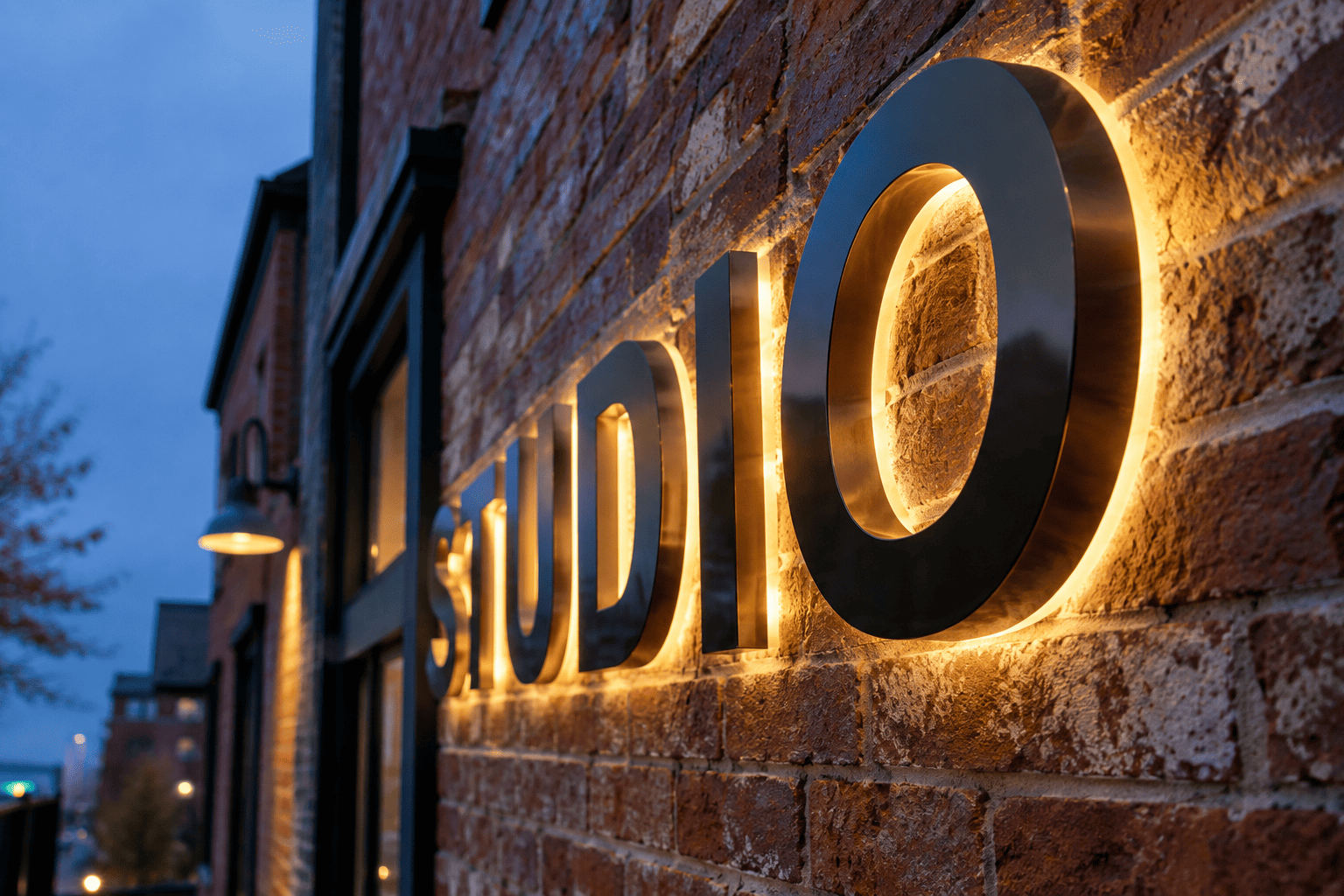
Channel letters are individually fabricated three-dimensional letters, usually aluminum returns with acrylic faces and internal LED illumination. They're the standard for a reason: they read cleanly at a distance, they look intentional rather than improvised, and they can be front-lit, halo-lit (reverse channel), or combination-lit depending on the effect you want. Halo-lit letters in particular give a refined look that works well on brick and stone.
LED and Illuminated Signs
Nearly all new illuminated signage uses LED rather than neon or fluorescent for lower power draw, longer service life, and easier repair. Options include illuminated cabinets, light boxes, edge-lit acrylic, backlit lettering, and pylon signs for properties that need height and roadway visibility. Ask about the LED modules, the power supplies, and the warranty on both, since those components determine how the sign ages.
Outdoor and Monument Signs
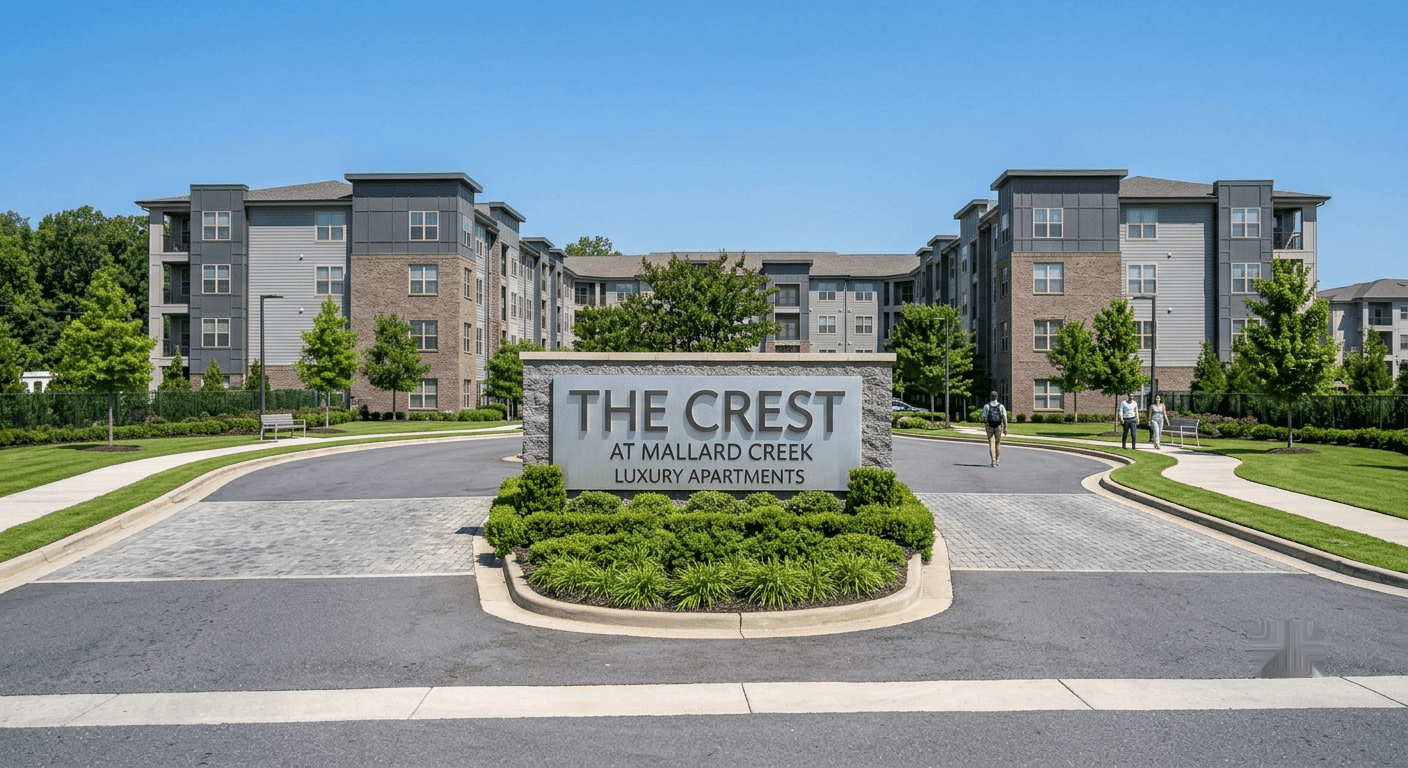
Freestanding outdoor signs suit properties set back from the street: medical offices, suburban-style retail, office parks, apartment communities, and campuses. Monument signs are typically built from aluminum, high-density urethane, stone, or masonry veneer with dimensional or illuminated lettering. They involve footings and foundation work, which adds site prep and often an additional permitting layer. For larger structures, Sunrise Signs has written about integrating the design-build process on large-scale signage.
Interior and ADA Signs
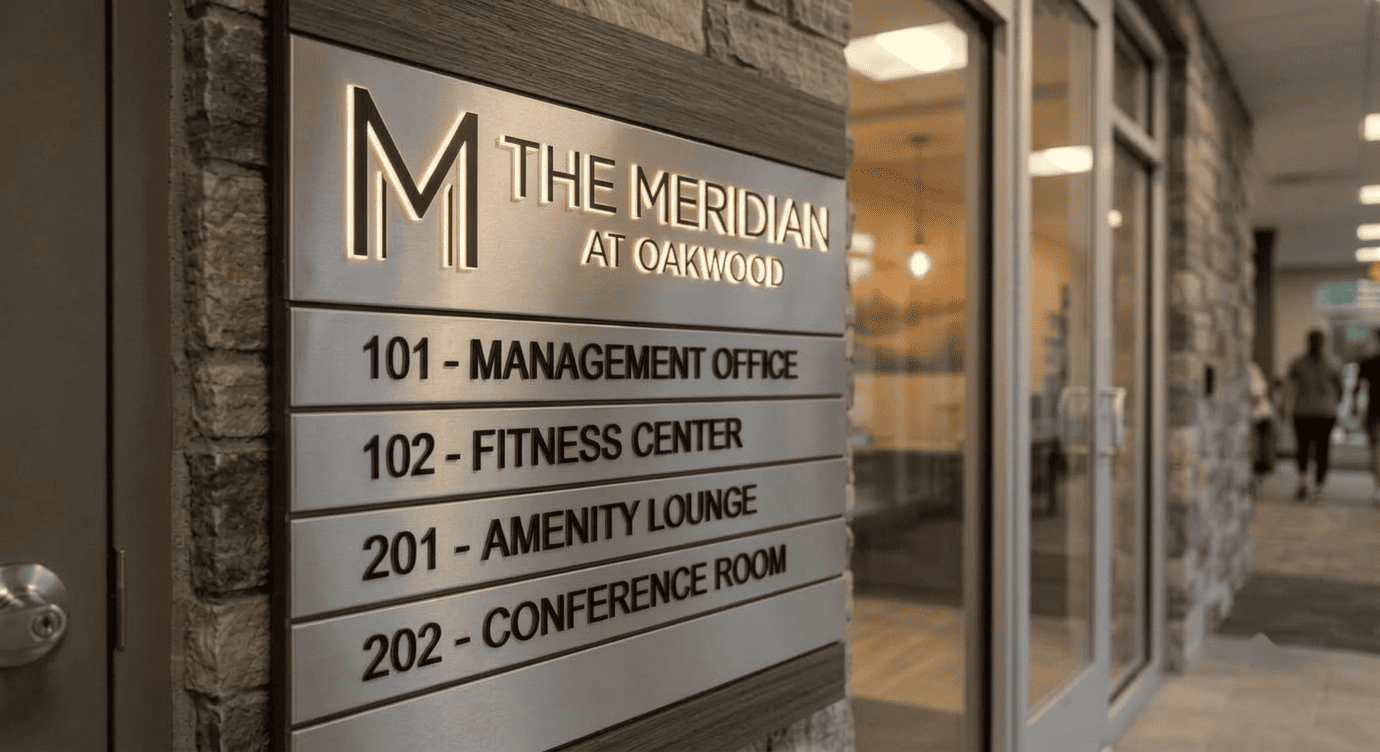
Interior signs cover lobby and reception branding, directories, wayfinding, door and suite identification, dimensional wall logos, and environmental graphics. ADA signage carries specific requirements for tactile characters, Grade 2 Braille, character height, non-glare finish, contrast, and mounting position. Any sign company working on commercial interiors should be fluent in these requirements without being asked twice. If you're weighing how interiors affect customer perception, see 10 ways environmental graphics improve customer experience.
Vehicle Graphics and Wraps
For service businesses, vehicles are mobile advertising that covers the whole metro area. Options range from simple cut-vinyl lettering and door logos to partial and full vehicle wraps with printed, laminated films. Quality here depends on the film brand, the laminate, the surface preparation, and the installer's skill around curves, recesses, and door handles. The comparison of cast versus calendered vinyl is a helpful primer on why material grade matters.
7 Things to Look for When Choosing a Custom Sign Company in Philadelphia
1. Experience and Local Knowledge
Ask how long the company has been in business and, more usefully, how long the people doing your project have been doing this work. Longevity matters because signage problems surface over years, not weeks, and a shop that has been around has already learned which materials hold up here. Sunrise Signs has been fabricating and installing signs in the Philadelphia region since 2008.
Search for experience with commercial projects similar in scale to yours. A company that mostly produces yard signs and banners is a different operation from one that regularly fabricates and installs illuminated channel letters twenty feet up.
Local knowledge is its own category. A local sign company in Philadelphia knows how the permit process actually runs, how historic district review affects certain corridors, which neighborhoods have tighter restrictions, and how to work around the realities of narrow streets, limited staging space, and shared walls. If you're weighing a regional shop against a national vendor, this breakdown of a national signage partner versus a local sign company covers the trade-offs.
2. Portfolio of Previous Sign Projects
A portfolio tells you more than any sales conversation. When reviewing one, look past the photography and evaluate:
- Design quality. Are the layouts balanced? Is the lettering proportioned to the building? Does the sign look like it belongs where it is?
- Material quality. Ask what each sign is made from and why those materials were chosen for that location.
- Range of sign types. A varied portfolio suggests real fabrication capability rather than one repeated product.
- Similar businesses and buildings. If you run a restaurant in a historic rowhome block, a company that has done exactly that will move faster and hit fewer surprises.
Ask to see a few projects that are several years old. New signs always photograph well. Older ones tell you how the work holds up. Sunrise Signs publishes full project case studies, including a mixed-use signage program in Fishtown.
3. Design and Customization Capabilities
Custom sign design is where a project is won or lost. A strong sign partner will take your brand and adapt it intelligently to a physical object at a specific scale, rather than simply enlarging a logo file.
Things worth confirming:
- Whether design is done in-house and whether revisions are included
- How they handle brand color matching, including PMS matching on painted and printed surfaces
- Typography decisions, including how fonts hold up at distance and in illuminated form
- Capability with 3D and dimensional lettering, depth, returns, and mounting standoffs
- Whether the sign company provides digital previews or renderings of the sign superimposed on a photo of your actual building is important.
That last point is more valuable than it sounds. Seeing the proposed sign on your façade, at real proportions, prevents the most expensive kind of mistake. Sunrise Signs backs its design stage with a design satisfaction guarantee.
4. Quality of Materials and Manufacturing
Ask directly what the sign will be made of and, where relevant, what thickness or grade. Common materials in commercial sign fabrication include:
- Aluminum for cabinets, channel letter returns, panels, and frames. Durable, rust-resistant, and the workhorse of exterior signage.
- Acrylic for illuminated faces and dimensional lettering. Diffuses light evenly and holds color well.
- PVC and expanded are used for interior dimensional letters and certain interior dimensional letters and some protected exterior applications.
- LED components, including modules, power supplies, and wiring, where quality varies enormously and determines service life.
- Vinyl films for window graphics, panel faces, and vehicle applications, where the film grade and laminate matter for fade and adhesion.
- Weather-resistant finishes, including powder coating, automotive-grade paints, UV-stable inks, and properly sealed seams and penetrations.
Is it manufactured in their shop, or is it outsourced? In-house fabrication typically translates into better quality control, faster fixes, and more accountability should something need rework.
5. Installation Services
Fabrication and installation are separate skills, and the second one is where safety and liability live. Confirm that the company installs its own work or uses a consistent, insured crew.
Questions worth asking:
- Is installation handled by their employees or a vetted installer network, and are they insured for the work?
- Who handles electrical connections, and are licensed electricians involved where required?
- How will the sign be mounted, and what does the substrate require: brick, stucco, EIFS, metal panel, or glass?
- What safety equipment and street access are needed, and do they arrange lift equipment or permits for sidewalk closure?
- Will they remove and dispose of the existing sign and patch or repair the façade where the old one was attached?
6. Local Rules and Licenses
Philadelphia zoning and building codes regulate the size, location, projection, illumination, and type of commercial sign, with requirements that vary depending on the zoning district. Certain corridors and historically certified properties carry additional review. Illuminated and electrical signs typically involve their own approvals.
The practical question for you is simple: who handles the permits? An experienced commercial sign company will manage drawings, applications, and the back-and-forth with the city as part of the project and will tell you up front where your specific location has restrictions. A company that says permits are your problem is telling you something about how the rest of the project will go.
Also confirm landlord and property requirements. Many leases contain signage clauses, and shopping centers, apartment communities, and office buildings often have their own sign criteria that override what you'd otherwise be allowed.
7. Pricing, Warranty, and Maintenance
Get quotes in writing and get them itemized. A useful quote separates design, fabrication, materials, permits, electrical work, installation, and removal of any existing sign, so you can see what you're actually comparing. Request a written quote here.
Then look past the total to the terms:
- What is warrantied, and for how long? Fabrication, finish, and LED components often carry different terms.
- Does the warranty cover labor and service calls, or only parts?
- Who repairs the sign if a module fails or a storm damages it, and what's the typical response time?
- Is there an ongoing maintenance or service option?
- Are replacement parts available years from now, or is the design dependent on a component that may be discontinued?
If you've already been quoted elsewhere, it's worth knowing that Sunrise Signs offers a price match guarantee on comparable scope.
Questions to Ask a Sign Company Before Hiring
Bring this list to your first conversation. The answers, and how readily they come, will tell you a great deal.
- How long have you been making signs, and how long has your fabrication team been together?
- Do you handle design and fabrication in-house, or is it outsourced?
- What materials do you recommend for my location and exposure, and why those?
- Do you handle Philadelphia sign permits, including zoning and any historic review?
- Do you provide installation with insured crews, and do you handle the electrical work?
- How long will the project take from approved design to installed sign?
- What warranty do you provide on fabrication, finish, and LED components?
- Do you offer sign repair and ongoing maintenance?
- Can I see examples of similar projects, including a few that are several years old?
- What could cause the timeline or cost to change once we start?
How Much Does Custom Signage Cost in Philadelphia?
There's no meaningful single answer, because a vinyl window graphic and an illuminated monument sign are different projects by orders of magnitude. What's more useful is understanding what drives the number, so you can read a quote intelligently and control cost where it makes sense.
Cost factors include:
- Size. Square footage drives material, structure, and handling.
- Materials. Aluminum, acrylic, and quality finishes cost more than basic substrates and last considerably longer.
- Illumination. Lighting adds LEDs, power supplies, wiring, and usually electrical work and additional permitting.
- Design complexity. Intricate logos, dimensional depth, custom shapes, and multi-layer construction all add fabrication hours.
- Installation conditions. Height, lift or scaffolding requirements, difficult façades, limited street access, and after-hours work all affect labor.
- Electrical work. Running new power to a sign location is a meaningful line item.
- Permits. Application fees, drawings, and any special review add time and cost.
- Location. Site access, parking, and staging in dense parts of the city can affect install pricing.
- Custom fabrication. Anything built from scratch rather than assembled from stock components costs more and looks it.
When you request quotes, give every company identical information: the same dimensions, the same illumination requirement, the same logo files, and the same site photos. Otherwise you're not comparing prices; you're comparing assumptions. For vehicle projects specifically, Sunrise Signs publishes a wrap and fleet graphics pricing overview.
How to Compare Sign Companies in Philadelphia
The lowest quote is often the most expensive option over a sign's life, because the savings usually come from thinner materials, cheaper LEDs, subcontracted installation, or scope that quietly excludes permits and removal. Compare the full picture instead:
- Experience with your type of business and your type of building
- Portfolio quality, including older work
- Materials specified in writing, not described vaguely
- Design services and whether revisions and renderings are included
- Fabrication in-house versus outsourced
- Installation by insured, experienced crews
- Warranty terms on fabrication, finish, and electrical components
- Customer service, judged by responsiveness during the quoting stage, which is when they're trying hardest
- Project timeline, including permit lead time
- Total project cost, with every line item accounted for
A simple exercise: put each quote side by side and mark anything one company included that another didn't. Those gaps usually explain the price difference entirely. If your business operates in more than one city, also read the benefits of working with a national signage partner before defaulting to a single-location shop.
Custom Signage for Different Philadelphia Businesses
Retail Stores
Retail lives on visibility and impulse. Illuminated storefront signs, window graphics, blade signs for pedestrian sightlines, and interior décor graphics all work together. Seasonal window applications give you a way to keep the storefront feeling current without touching the permanent sign.
Restaurants
Restaurants get the most out of signage with personality: dimensional lettering, halo-lit letters on brick, projecting signs visible down the sidewalk, neon-style LED, menu boards, and awnings where permitted. Nighttime legibility matters more here than almost anywhere else.
Offices
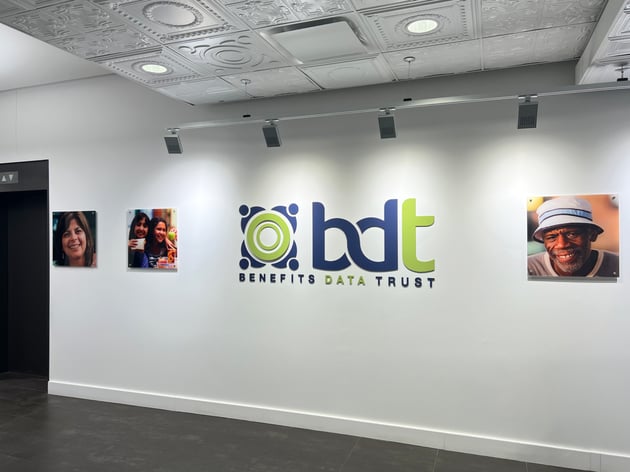
Office signage is about clarity and credibility: building identification, lobby logo walls, directories, wayfinding, and door signage. Coordination with building management and tenant sign criteria is usually part of the job, and a fully branded workspace program ties it together.
Healthcare Businesses
Medical and dental practices need clean exterior identification plus a thorough interior program: department wayfinding, room and suite identification, ADA-compliant signage throughout, and privacy or safety notices. Consistency and legibility outrank flair. Sunrise Signs covers the planning side in designing effective wayfinding systems for hospitals and healthcare facilities.
Hotels and Hospitality
Hospitality projects tend to be full environmental programs: exterior identification, porte-cochère and directional signage, room numbering, amenity and elevator signage, and back-of-house wayfinding, all held to a brand standard. Environmental graphics and interior branding do most of that work.
Real Estate Businesses
Real estate needs both permanent and temporary signage: office identification, post-and-panel property and leasing signs, development site signage, and building-mounted banners during construction or lease-up. Multifamily developers usually need a full property signage package; see the student housing program at The Avery for scope.
Professional Services
Law firms, accounting practices, agencies, and consultancies generally want restrained, high-quality work: dimensional lettering in metal finishes, etched or frosted glass graphics, lobby logo walls, and suite identification that reads as established rather than loud.
Why Work With a Local Philadelphia Sign Company?
Local project knowledge. A local company has worked on your kind of building, in your kind of neighborhood, and knows which approaches tend to get approved.
Easier communication. Time zones and hand-offs aside, a local shop can be reached, visited, and held accountable.
Site visits. On-field accurate measurement, substrate assessment and power availability checks are done. Remote quoting based on photos is where surprises come from.
Installation support. Local crews mean scheduling flexibility and fewer travel-related costs and delays.
Permit familiarity. Experience with Philadelphia's process shortens timelines, because the company already knows what the application needs to contain.
Maintenance and repairs. When an LED module fails or a panel is damaged, a local company can service the sign without a special trip being priced into the job.
Faster response for local projects. For rush installs, storm damage, or a last-minute opening date, proximity is the whole advantage.
Sunrise Signs works out of Gloucester City, minutes from Center City, and serves Philadelphia, South Jersey, and the wider Tri-State area. Get in touch here.
Final Checklist Before Hiring a Custom Sign Company
- Review the portfolio, including older projects
- Confirm experience relevant to your business type and building
- Compare the specified materials, not just the prices
- Request a detailed, itemized quote
- Ask who handles permits and what the approval timeline looks like
- Confirm installation is included and who performs it
- Check warranty terms on fabrication, finish, and electrical components
- Discuss the full timeline, from design approval to install day
- Ask about ongoing maintenance and repair availability
- Review and approve the final design or rendering in writing
Choosing a custom sign company in Philadelphia comes down to finding a partner who designs thoughtfully, builds with materials suited to this climate, handles permits and installation properly, and stands behind the work afterward. Take the time to review portfolios, ask direct questions, and compare quotes on scope rather than price.
Ready to start?
Talk to the team about your building, your brand, and your timeline.
Request a Free Quote