


Large-scale signage projects rarely fail because of a bad sign. They fail because of a broken...
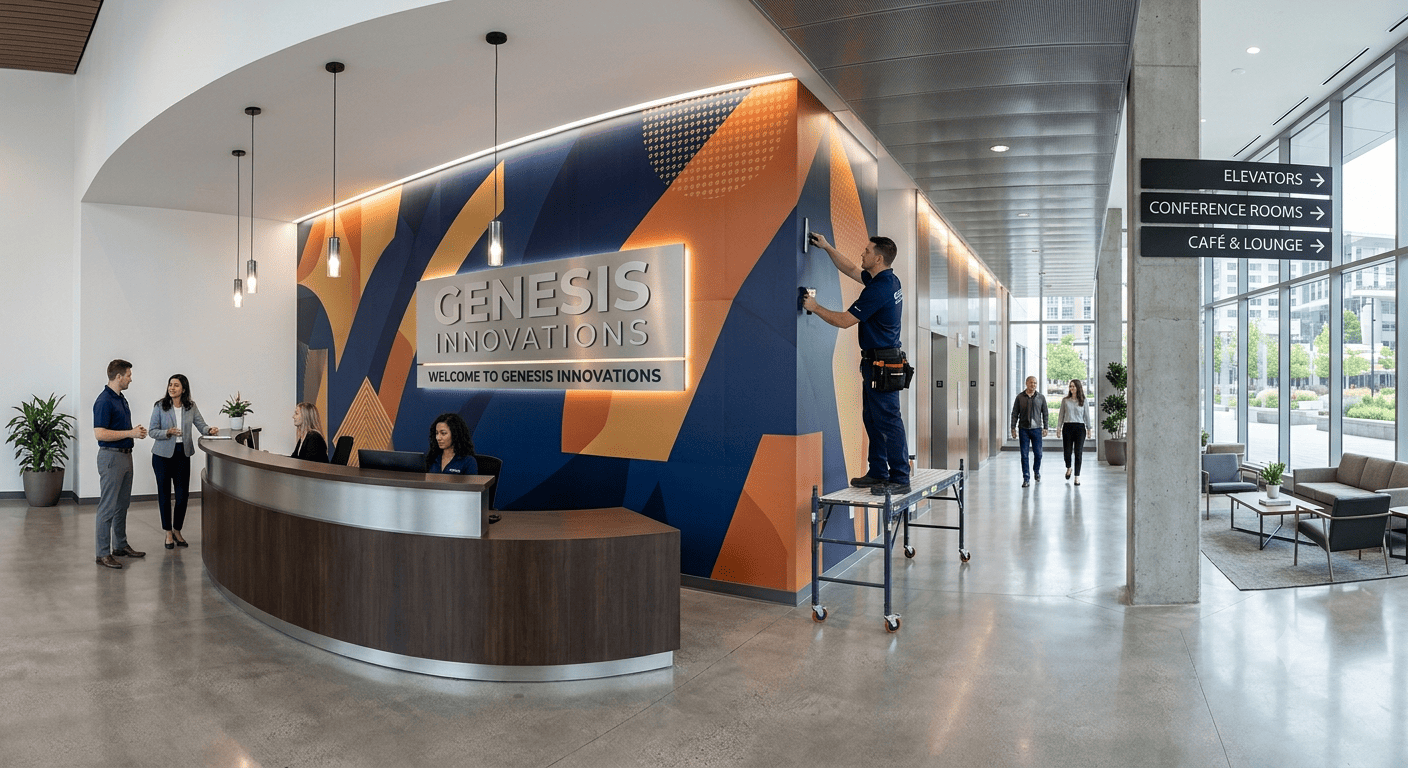
Environmental graphics turn ordinary buildings into branded, easy-to-navigate spaces. Wall graphics, dimensional lettering, wayfinding systems, and signage tell visitors who you are and where to go, long before anyone speaks to a receptionist.
Getting those elements built is often harder than designing them. Many businesses hire one company for design, another for fabrication, and a third for installation, then add a general contractor and a property manager to the mix. Each handoff is a chance for a missed measurement, a delayed schedule, or a color that does not quite match.
A design-build approach brings the whole process under one project partner. Planning, design, fabrication, and installation run as a single coordinated effort. The result is clearer communication, more consistent branding, tighter scheduling, and a smoother installation.
In this guide, you will learn what design-build environmental graphics are, where multi-vendor projects go wrong, the seven main benefits of one partner, how the process works step by step, and how to choose the right team for your commercial space.
What Are Design-Build Environmental Graphics?
Design-build environmental graphics combine planning, design, fabrication and installation into one coordinated delivery approach. A single team is responsible for taking a project from the first brand conversation to the final sign on the wall.
Understanding the Design-Build Signage Approach
In traditional signage procurement, the client acts as the coordinator. You brief a designer, send approved artwork to a fabricator, then find an installer who can work with whatever was produced. Every party sees only its own slice of the project.
Design-build works differently. One partner provides single-source project coordination, so the people drawing the graphics sit alongside the people who build and install them. Installers flag access problems while concepts are still on paper. Designers learn how materials behave before a drawing is finalized. Problems surface early, when they are cheap to fix.
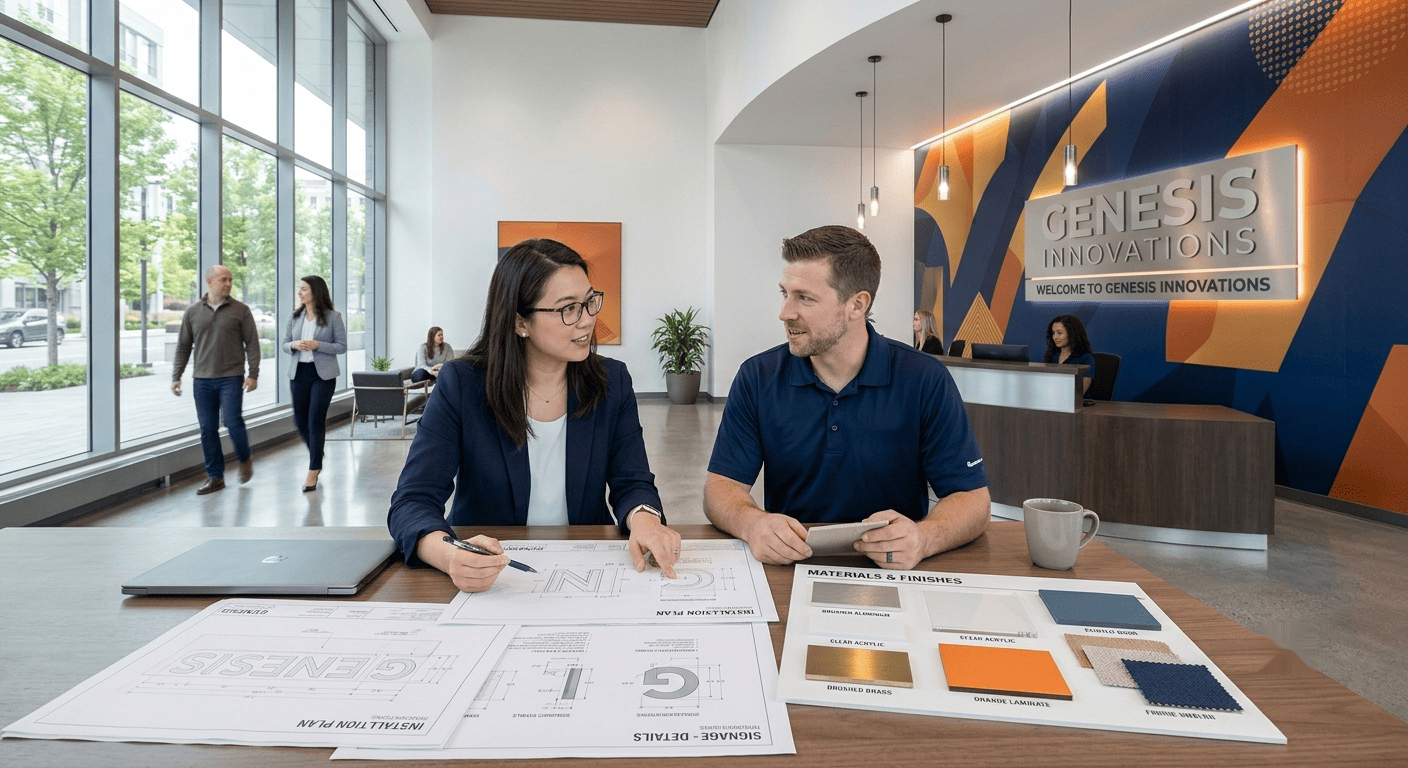
What Is Included in a Complete Environmental Graphics Project?
A full project typically covers:
- Environmental graphic design and branding
- Interior and exterior signage
- Wayfinding and directional systems
- Wall graphics and dimensional lettering
- Sign fabrication and professional installation
The exact scope depends on the property, but the principle holds: custom environmental graphics are planned as one system rather than a pile of separate purchases. For the financial case behind that approach, see the business case for environmental graphic design across all property types.
Why Managing Multiple Vendors Can Complicate Commercial Signage Projects
Hiring separate companies for design, fabrication and installation can work, but it shifts the burden of signage project management onto you. These are the problems US businesses run into most often.
Communication Gaps Between Design and Installation Teams
Designers rarely visit the site, and installers rarely see the design intent. Details such as wall condition, mounting hardware or ceiling height get lost between emails, and nobody owns the gap.
Project Delays Caused by Multiple Vendor Schedules
Each vendor has its own backlog. If fabrication slips by a week, the installer may be booked elsewhere, and the new date has to be re-coordinated with your contractor and property team.
Inconsistent Branding Across Different Signage Elements
When different companies produce different pieces, colors, typefaces and finishes can drift. A lobby wall and an exterior monument sign that should match end up looking like they belong to different brands.
Unexpected Costs and Installation Rework
A sign built to the wrong dimensions, or a graphic that does not suit the surface, has to be remade or modified on site. Rework adds material cost, labor and lost time, and each vendor may point to another as the cause.
Unclear Project Responsibilities and Accountability
When something goes wrong, the question of who is responsible can take longer to answer than the fix itself. With divided responsibilities, the client often ends up as the referee.
7 Benefits of Working With One Design-Build Environmental Graphics Partner
The business value of design-build comes down to one idea: a single partner owns the entire outcome. Here is what that looks like in practice.
1. Simplified Communication With One Point of Contact
Instead of juggling a designer, a fabricator and an installer, you talk to one project lead. Questions, approvals and changes all go through one channel, which saves time and avoids conflicting instructions.
2. Better Coordination From Design to Installation
Designers, fabricators and installers work inside one process and share the same drawings, site notes and schedule. Decisions made at the design stage already account for how the signs will be built and mounted.
3. Consistent Branding Across Commercial Spaces
One partner applies your brand guidelines, typography, colors and visual identity to every element, from a reception wall to exterior identification. That consistency builds recognition, especially across multiple floors or locations.
4. More Efficient Project Scheduling and Installation
Installation planning, site access and sequencing are handled alongside production. The partner can coordinate with construction teams so signs go in when the space is ready, not before or long after.
5. Improved Quality Control Throughout the Project
Integrated oversight means someone checks the work at every stage, from proofing artwork to inspecting finished pieces. Catching an error before fabrication is far cheaper than fixing it on the wall.
6. Better Budget Visibility and Cost Management
A single estimate covering design, materials, production and installation makes the full cost easier to see. Material selection and production planning can be aligned to budget from the start, which helps surface cost efficiencies and reduce surprises. For a sense of what drives price on one common sign type, see this wayfinding signs pricing guide.
7. Clearer Accountability and Easier Problem-Solving
When one company is responsible for the result, issues get resolved faster. There is no hand-off to dispute, and the team that built the sign is the team that fixes it.
How the Design-Build Environmental Graphics Process Works
A well-run project follows a clear path from first conversation to final handover.
Step 1: Project Discovery and Initial Consultation
The team learns your business goals and branding requirements, defines the scope and signage needs, and identifies stakeholders and timelines. Getting these basics right keeps later stages focused.
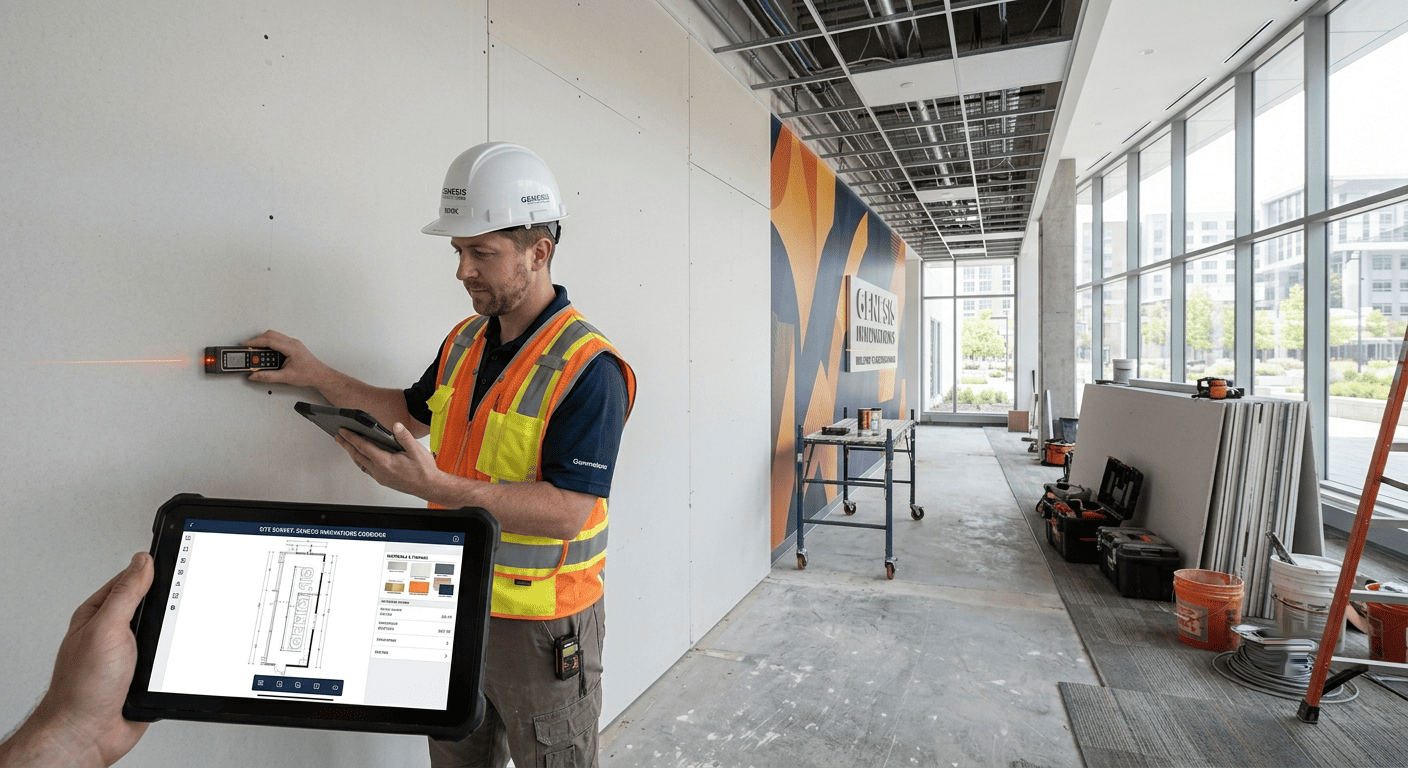
Step 2: Site Surveys and Environmental Assessment
Specialists visit the property to evaluate building layouts and architectural features, measure and review installation surfaces, and note access, lighting and other site-specific conditions. Accurate field data prevents costly redesigns.
Step 3: Environmental Graphic Design and Concept Development
Designers develop branded graphic concepts, plan wayfinding and signage placement, and align every design with brand standards and architectural requirements. Because fabrication and installation teams are involved, concepts are practical as well as attractive.
Step 4: Material Selection and Sign Fabrication
The partner selects suitable materials and finishes, reviews durability against the environment where each sign will live, and manages production quality in-house or through vetted fabrication resources.
Step 5: Professional Signage Installation
Installation is scheduled around your operations and construction milestones. The team works with general contractors and property managers, and handles site access and installation requirements so the work goes in cleanly.
Step 6: Final Inspection and Project Handover
The team reviews installation quality, checks consistency with the approved designs, and addresses any outstanding adjustments. Handover includes the documentation and care information you need going forward.
Where Can Design-Build Environmental Graphics Make the Biggest Difference?
Design-build pays off most in environments where many sign types, many stakeholders and tight schedules come together.
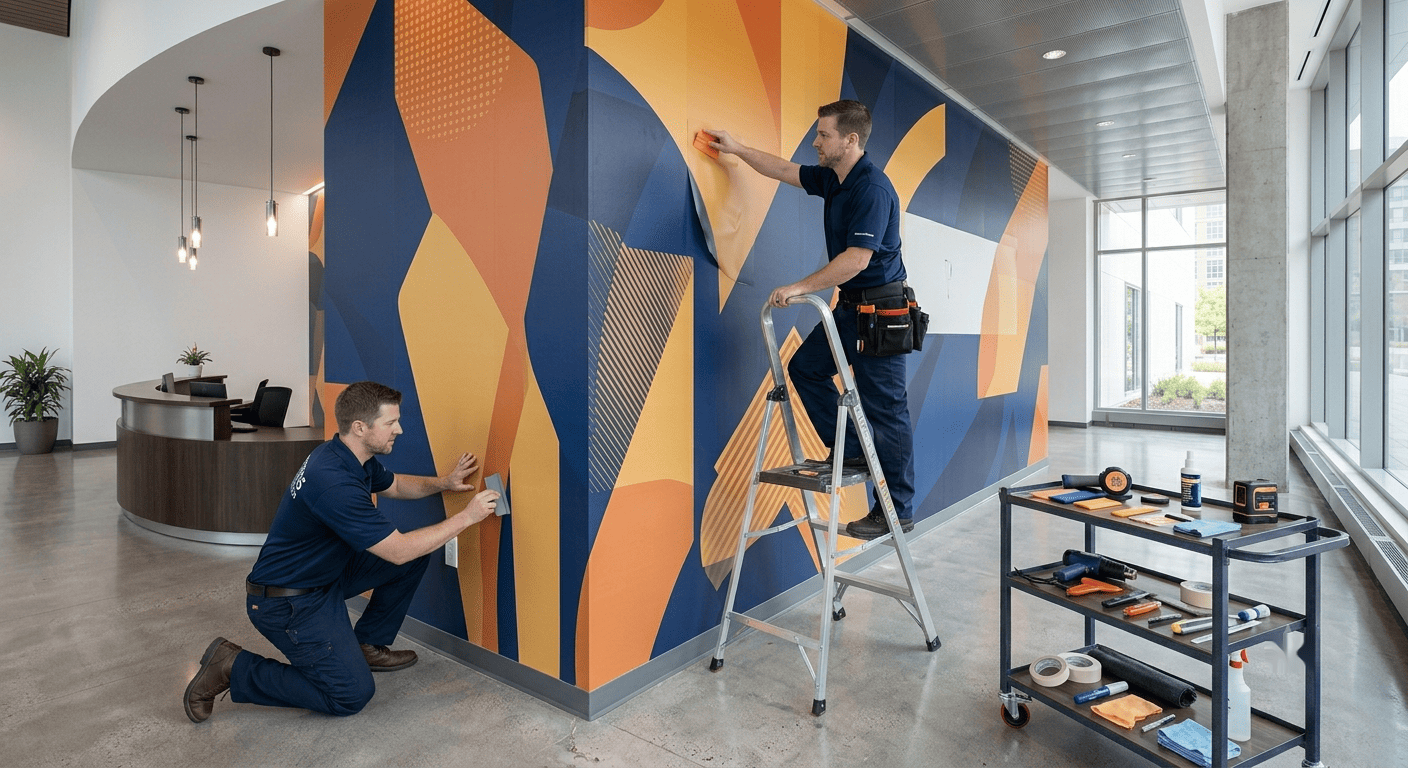
Corporate Offices and Commercial Workspaces
Offices need a cohesive identity from the front door to the conference room, which is the goal of branded workspace signage. Typical elements include:
- Branded office walls
- Reception and lobby graphics
- Employee wayfinding
- Conference room identification
Multifamily Housing and Apartment Communities
Multifamily signage helps apartment communities compete on first impressions and ease of navigation. This multifamily signage cost breakdown helps with budgeting. Common projects include:
- Apartment monument signs
- Leasing office branding
- Amenity signage
- Community wayfinding systems
Healthcare Facilities and Medical Offices
Wayfinding systems for hospitals and healthcare facilities reduce stress for patients and staff, and these spaces often involve strict accessibility needs. Typical scopes include:
- Patient navigation systems
- Department identification
- Interior branding
- Directional signage
Retail and Hospitality Properties
Customers judge a venue quickly, so consistent branding and intuitive navigation matter. Projects often include:
- Branded interiors
- Customer navigation
- Promotional wall graphics
- Exterior identification signage
Design-Build vs. Hiring Separate Signage Vendors: What's the Difference?
Design-build centralizes coordination, while separate vendors leave coordination to you. This table summarizes the main differences.
|
Project Factor |
Design-Build Partner |
Separate Vendors |
|
Communication |
Centralized coordination |
Multiple contacts |
|
Project management |
Integrated oversight |
Requires coordination |
|
Design and installation |
Connected workflow |
Separate responsibilities |
|
Brand consistency |
Easier to maintain |
Requires additional oversight |
|
Scheduling |
Coordinated project timeline |
Multiple schedules |
|
Accountability |
Centralized responsibility |
Divided responsibilities |
Separate vendors can still make sense for smaller or highly specialized projects, such as a single sign or a one-off custom piece. For complex commercial installations and multi-location rollouts, design-build is often the more advantageous approach.
Important Considerations for Commercial Environmental Graphics Projects in the USA
US projects come with regulatory and practical factors that a knowledgeable partner will plan for from day one.
ADA Signage and Accessibility Requirements
The Americans with Disabilities Act sets accessibility requirements for many permanent room and space identification signs. These can include tactile characters, Braille, high visual contrast, non-glare finishes and specific mounting locations. Compliance is easier when the same team designs, fabricates and installs your ADA signs, because placement and construction are planned together. Always confirm current requirements for your project type and jurisdiction.
Local Sign Permits and Zoning Regulations
Exterior signage rules vary by city, county and property. Size, height, illumination and placement may be regulated, and many municipalities require permits before installation. Your partner should understand the approval process or help you work with your local authority.
Coordination With General Contractors and Construction Teams
Signs are usually among the last items installed, which means they are exposed to schedule changes upstream. A partner experienced in construction environments can align delivery with site readiness, trade sequencing and access windows.
Material Durability and Environmental Conditions
Indoor and outdoor applications need different materials and finishes. Exterior signs must handle sun, rain, wind, heat and cold, and the right choice can vary by region. Good material selection protects both appearance and long-term value. For apartment communities, this signage lifespan and maintenance guide covers what to expect.
How to Choose the Right Environmental Graphic Design-Build Partner
Not every full-service signage company delivers the same level of coordination. Use these criteria to evaluate your options, and see this guide to choosing a sign company from design to installation.
Look for Experience With Commercial Environmental Graphics
Choose a team that regularly works on commercial properties like yours, whether offices, multifamily communities, healthcare facilities or retail spaces.
Evaluate In-House Design and Fabrication Capabilities
Ask which services are handled in-house and which are subcontracted. More in-house capability generally means tighter control over quality and schedule.
Check Professional Installation Experience
Installation is where design meets reality. Look for trained crews who are comfortable working around construction teams and occupied buildings.
Review Previous Commercial Signage Projects
Request case studies, photos and references for projects similar in size and complexity to yours.
Ask About Multi-Location Project Management
If you operate more than one site, confirm the partner can standardize designs and manage rollouts consistently across locations. A national signage partner can also simplify budgeting when many sites change at once.
Understand Project Estimates, Timelines and Warranties
Get a clear estimate, a realistic timeline and written warranty terms. Ask what is included, what could change the price and how issues are handled after installation.
Common Mistakes to Avoid When Planning an Environmental Graphics Project
A little planning prevents most signage problems. Watch out for these:
- Starting design without evaluating site conditions. Surfaces, lighting and layout all affect what will work.
- Choosing materials without considering durability. A finish that looks great indoors may fail outside.
- Overlooking installation access and scheduling. Lifts, after-hours access and construction timing all matter.
- Ignoring ADA and local code requirements where applicable. Fixing non-compliant signs after installation is costly.
- Failing to establish clear project responsibilities. Decide up front who approves, who coordinates and who is accountable.
- Not planning for future branding updates or expansions. Modular systems make rebrands and new locations easier.
Simplify Your Next Environmental Graphics Project With One Partner
An integrated design-build approach connects design, fabrication and installation, so decisions made early hold up on the wall. One project partner means simpler communication, better coordination, consistent branding and clearer accountability, which is especially valuable on complex commercial projects and multi-location rollouts.
Looking to simplify your next commercial environmental graphics project?
Partner with an experienced signage team to manage everything from initial design and fabrication to professional installation.
Request a Free Quote
