


They are always looking for ways to make their properties more visible, improve how people see...
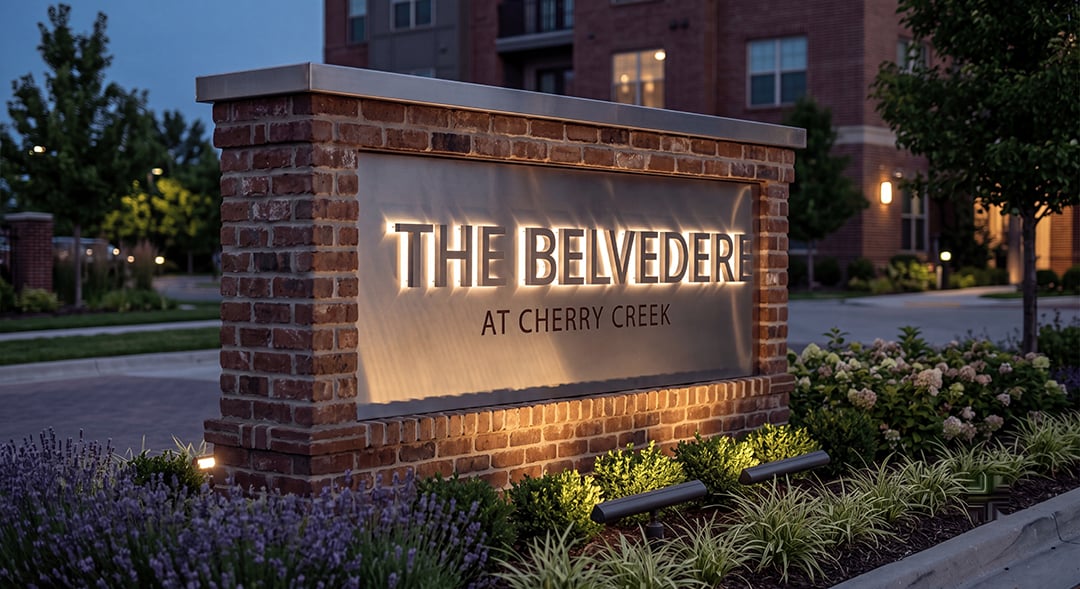 Signage is often one of the first things a prospective resident notices about an apartment community and one of the last things property owners budget for properly. From the entrance monument that sets the tone for curb appeal to the small parking and wayfinding signs that keep residents and visitors moving smoothly through the property, multifamily housing signage plays an outsized role in how a community is perceived and experienced.
It's also a significant property investment. Multifamily signage programs can range from a simple refresh of a few faded signs to a full community-wide rebrand covering dozens of buildings, and the price tag for each of those scenarios looks completely unique. Costs vary widely from property to property because so many variables are in play: the number and type of signs needed, the materials and finishes chosen, how complex the design is, whether illumination is involved, what installation and site conditions look like, and what local permitting requires.
This guide breaks down the major cost categories that make up a multifamily signage budget, walks through pricing considerations by sign type, and offers practical guidance for planning an accurate, well-scoped signage project in 2026. For a broader look at which signs a community actually needs, see our complete guide to essential multifamily signage.
How Much Does Multifamily Property Signage Cost in 2026?
There’s no one-size-fits-all number for signage, because signage cost is really the sum of several moving parts. The final investment depends on the number of signs needed, the materials and fabrication methods used, the complexity of the design, whether the signs are illuminated, the method of installation, and site-specific needs such as foundations, electrical work, and permitting.
The table below offers general planning ranges to help property owners and developers get a rough sense of scale before requesting a formal quote.
|
Project Type |
Estimated Budget Range |
|
Small signage refresh |
$2,000–$10,000+ |
|
Individual sign replacements |
$500–$5,000+ per sign |
|
New apartment monument sign |
$5,000–$25,000+ |
|
Community-wide signage system |
$15,000–$75,000+ |
|
Large multifamily signage program |
$50,000–$150,000+ |
Important: These figures are broad conceptual budgeting ranges rather than verified 2026 market averages. They're meant to help with early-stage planning, not to serve as a final quote. Monument construction, illuminated systems, structural work, permitting, and installation logistics can all shift a project's final cost significantly. The only way to get a precise number is through a detailed, site-specific quote from a signage provider.
Multifamily Property Signage Cost Breakdown
An analysis of the individual cost categories that comprise a typical project helps to better understand where the money in a signage budget really goes. Each of these can be priced individually or as part of a larger signage package, depending on the scope of the work and the provider.
Design and Planning Costs
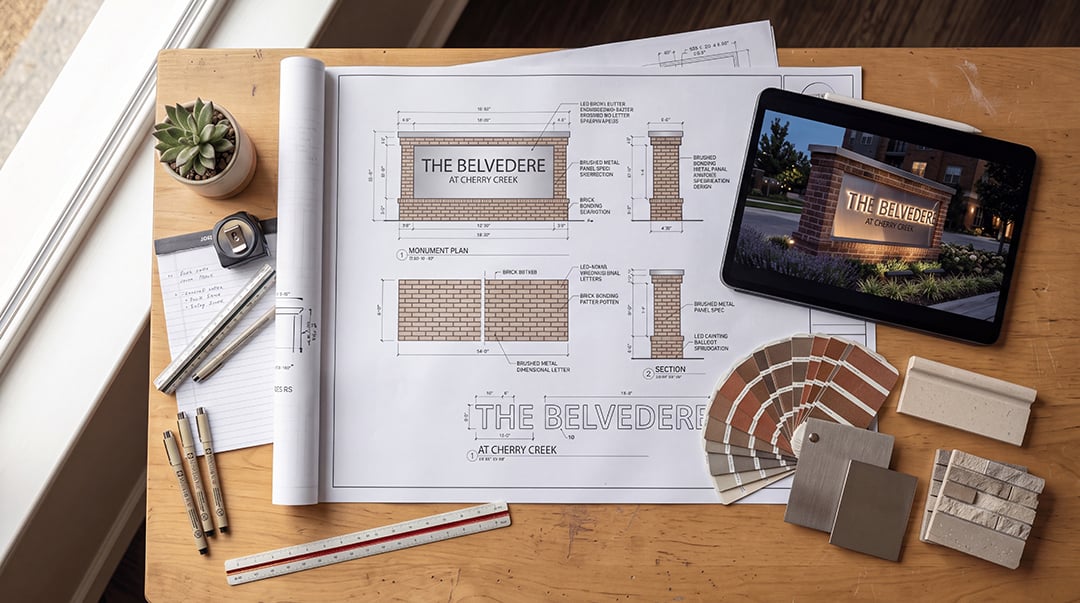
Most multifamily signage programs begin with a design and planning phase before a single sign is fabricated. This includes initial signage design and layout, with the property’s branding incorporated into each and every sign face, and performing site surveys to see exactly where signs need to be placed.
This phase often also produces a sign schedule and detailed specifications for each sign in the program, along with wayfinding planning to make sure residents and visitors can navigate the property intuitively.
Cost consideration: Custom design and planning may be billed as a standalone service or folded into the cost of a larger signage package, so it's worth asking a provider how design work is quoted.
Sign Manufacturing and Materials
Once designs are finalized, manufacturing begins. Material choice is one of the biggest cost drivers in any signage project. Common choices are aluminum and other metals, acrylic and PVC, dimensional lettering, full monument sign structures, durable exterior grade finishes, and custom colors or branded elements that match a property’s identity.
Cost consideration: Material selection, panel thickness, finish quality, overall size, and the total quantity of signs needed all directly influence manufacturing costs. A larger community with dozens of identical signs may benefit from economies of scale, while highly customized, one-off pieces tend to cost more per unit.
Installation and Site Work
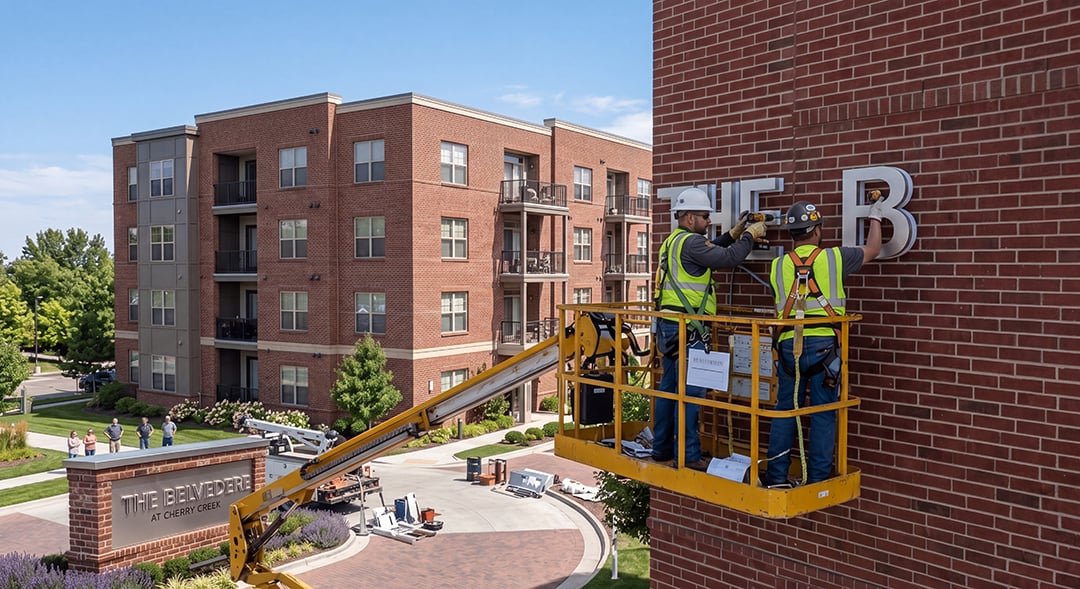
But creating a sign is only half the battle. Installation is a different cost category that is easy to underestimate. The installation may include the installation of wall-mounted signs, post and panel installations, monument sign foundations, the removal and disposal of existing signs, the use of lifts or other specialized equipment, and electrical connections for illuminated signs.
Cost factors: The complexity of installation and site conditions, such as difficult terrain, limited access, or existing infrastructure that needs to be removed first, can greatly affect the final project budget.
Permits and Regulatory Requirements
Multifamily signage isn’t created in a vacuum; it has to conform to a patchwork quilt of local rules. This typically includes local sign permits, HOA or property management approval requirements, zoning restrictions on sign size and placement, accessibility and regulatory ADA signage requirements, and electrical approvals when illumination is involved.
Cost consideration: Permit fees and compliance requirements vary widely by jurisdiction and project type, so it’s worth factoring permitting time and cost into any project timeline as an early consideration rather than an afterthought.
Lighting and Illumination
Generally luminous signs are much more expensive than non-luminous signs. This is mainly because of the added engineering and electrical work. Common illumination methods include internally illuminated cabinet signs, LED lighting systems, halo-lit dimensional letters, the electrical infrastructure needed to support them, and post-installation maintenance and energy considerations.
Cost Considerations: Illuminated signage typically requires more steps in fabrication, electrical work, and installation planning than non-illuminated signage, so there are usually higher initial and ongoing costs.
Apartment Signage Cost Breakdown by Sign Type
Beyond the general cost categories above, it's useful to look at pricing considerations for specific sign types, since a multifamily property typically needs several different kinds of signage working together as a system.
|
Sign Type |
Typical Cost Considerations |
|
Apartment Monument Signs |
Structure, materials, dimensional lettering, illumination, foundation, installation |
|
Building Identification Signs |
Size, lettering, mounting method, materials, quantity |
|
Wayfinding Signs |
Number of destinations, sign faces, posts, graphics, installation |
|
Parking Signs |
Regulatory requirements, quantity, mounting, custom branding |
|
Amenity and Interior Signs |
Materials, room identification, finishes, mounting |
|
Leasing Office Signs |
Branding, dimensional letters, illuminated or non-illuminated design |
Apartment Monument Sign Cost
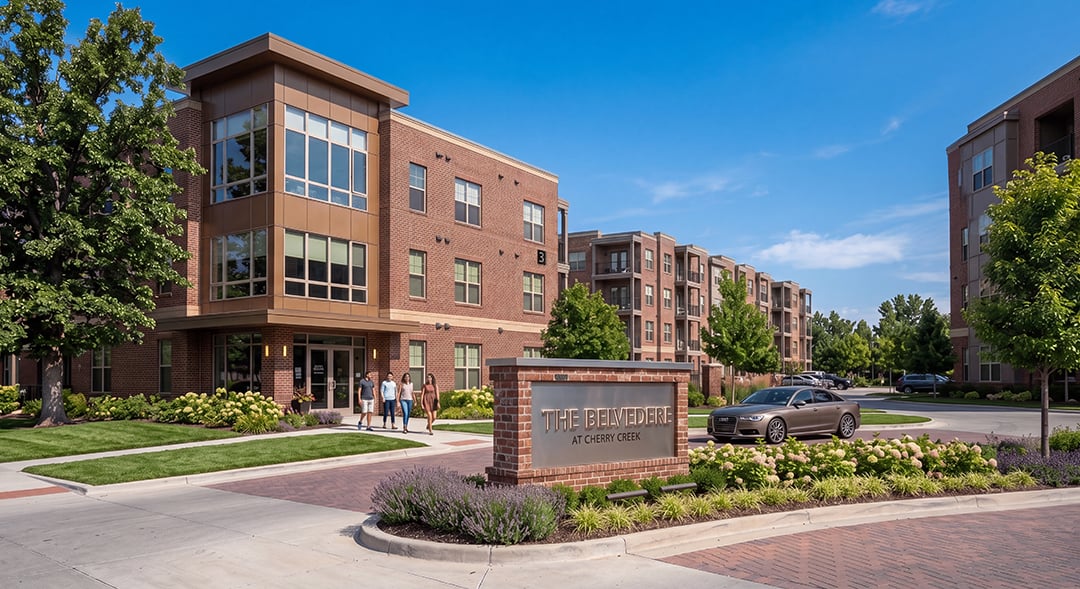
Monument signs are typically the most expensive individual sign on a multifamily property, and for good reason. Unlike a simple wall-mounted sign, a monument sign is a freestanding structure that often incorporates masonry, metal, or composite materials, along with dimensional logos and lettering that give it a premium look. Renovating an older property? Our post on why you shouldn't overlook your monument sign during a renovation covers the design trends worth considering before you rebuild.
Many monument signs also include lighting, which adds electrical work and fabrication complexity. On top of the sign itself, there's the cost of foundation work and site preparation, plus installation labor and permitting, all of which add up to make the monument sign one of the largest single-line items in a signage budget.
Multifamily Wayfinding Signage Cost
Wayfinding signage helps residents, visitors, and delivery drivers navigate a property without confusion, and its total cost depends heavily on scale. Directional signs, building identification markers, and parking or pedestrian navigation signs all fall under this category. See how modern wayfinding signage boosts resident satisfaction and retention for more on why this category matters beyond just cost.
The more sign locations a property needs and the more consistent the design needs to be across all of them, the higher the overall wayfinding budget will climb. Properties with sprawling layouts or multiple buildings typically require more extensive wayfinding systems than smaller, single-building communities.
Apartment Building Identification Sign Cost
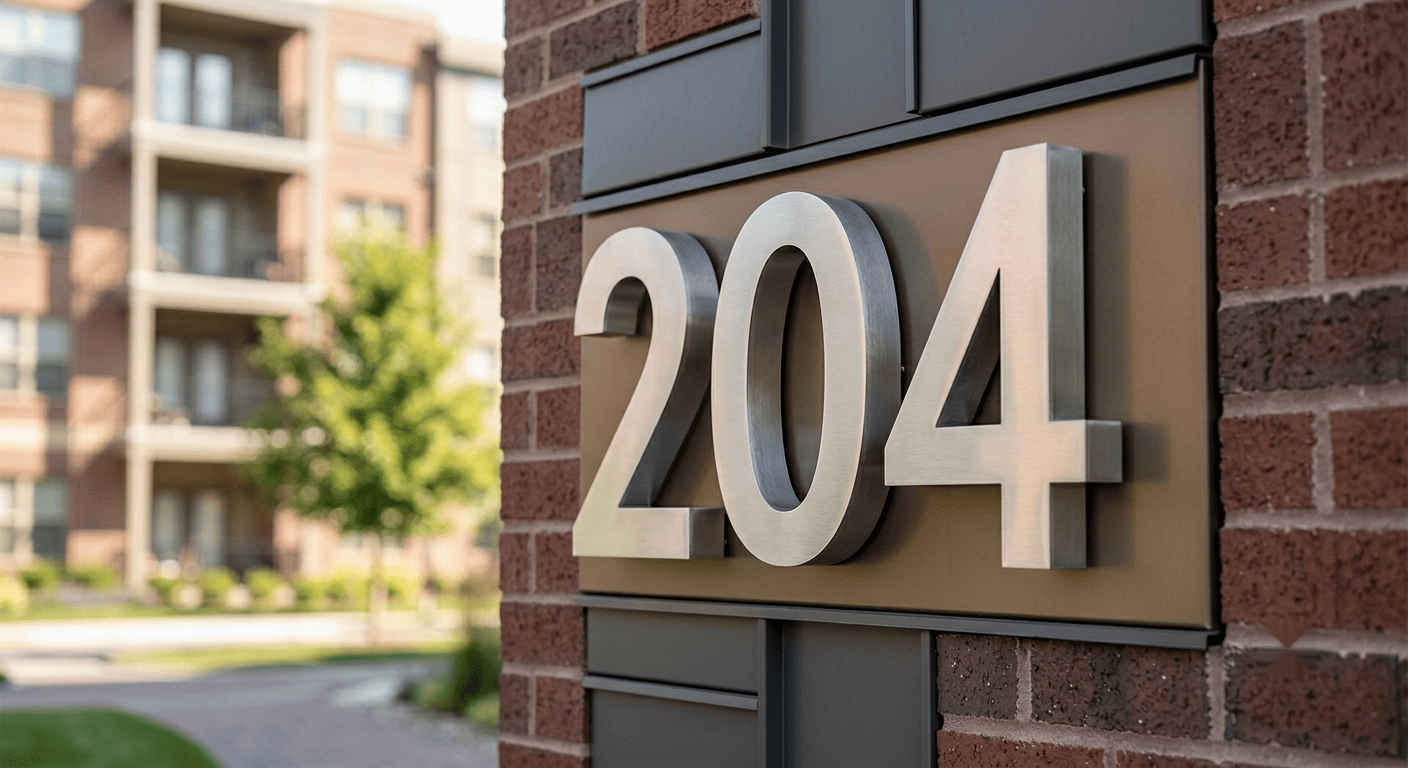
Building identification signage numbers, letters and markers that assist people in finding a particular building, floor or unit. This includes exterior building numbers and letters, general exterior identification signage, floor and unit-level signage, and the mounting surfaces and materials needed to install them durably.
Costs here scale primarily with the number of buildings and units on a property, as well as material durability requirements for exterior exposure.
Apartment Parking Signage Cost
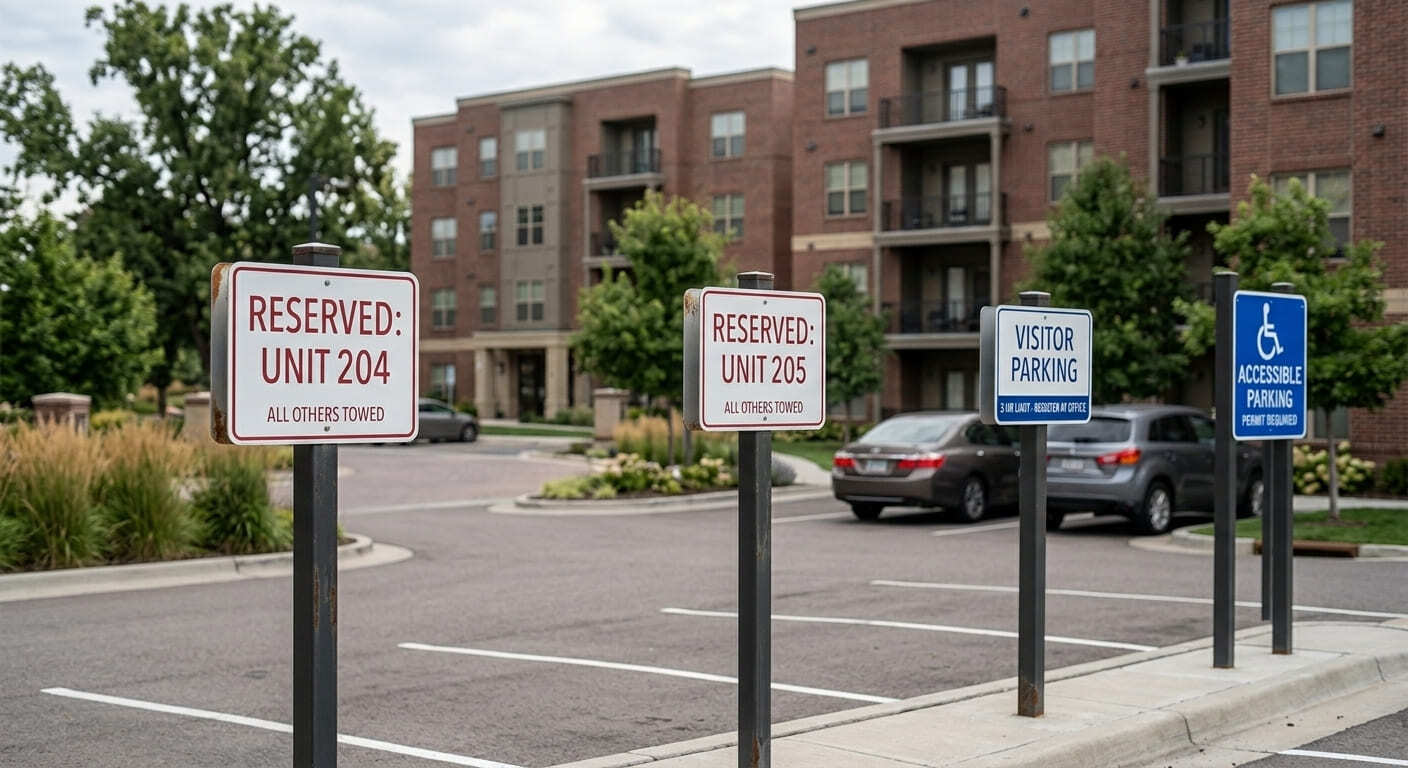
Parking signage is often overlooked in early budgeting but adds up quickly across a large community. This category includes reserved parking signs, visitor parking signage, garage signage, accessibility (ADA) signage, and directional or regulatory signs that guide traffic flow.
Because many of these signs must meet specific regulatory standards, and because a typical property may need dozens of them, parking signage can represent a larger portion of the budget than its individual sign cost might suggest.
Exterior vs. Interior Apartment Signage: Cost Comparison
Exterior signs are priced differently than interior signs because they face very different demands. Exterior signs can be exposed to the weather for years of use, which usually means higher material costs. Interior signs can usually use interior-grade materials at a lower cost.
|
Factor |
Exterior Signage |
Interior Signage |
|
Material requirements |
Weather-resistant |
Interior-grade options |
|
Installation |
May require equipment or foundations |
Often simpler mounting |
|
Durability |
Designed for outdoor exposure |
Depends on interior environment |
|
Illumination |
More common for entrances |
Optional |
|
Cost drivers |
Size, site work, materials |
Design, finishes, quantity |
Understanding these differences can help property owners allocate budgets appropriately, putting more investment into durable, weather-resistant exterior signage while keeping interior signage costs proportionate to their more controlled environment.
Custom Multifamily Signage vs. Standard Signs: Which Costs More?
Custom signs tend to cost more than a typical off-the-shelf sign up front, but this is not an apples-to-apples comparison. Custom signs offer much greater design flexibility, allowing a property to express its own branding and community identity, rather than simply a generic template.
Custom work usually provides more options for materials and finishes, and the manufacturing requirements are generally more specialized, which drives up the cost. But custom signage can mean long-term consistency throughout a property's entire signage system, which is harder to achieve when mixing and matching standard sign products.
Custom signage has a higher initial cost but is often a better long-term value for properties investing in a strong brand presence or a distinctive resident experience, as it eliminates the need for future rebranding or piecemeal replacements. Learn more about building a cohesive brand identity through property signage.
Apartment Signage Installation Cost: What Property Owners Should Know
One of the most common budgeting mistakes when working on multifamily signage projects is to only look at the manufacturing quote and ignore installation costs. Installation is much more than putting up a sign. Installation labor, removal and disposal of old signage, wall and post mounting work, foundation and excavation work for freestanding signs, electrical work for illuminated signs, and any equipment or site access needs (such as lifts for elevated signage) are all part of installation.
A low manufacturing quote can be misleading if it doesn't account for these installation factors. Property owners should always ask whether a quote is for the sign itself, the fully installed project, or something in between so they can compare quotes accurately across providers.
Apartment Signage Replacement Cost vs. New Signage Installation
Not every signage project starts with a clean slate. Many properties need to update or replace existing signage or install a completely new system. Typical replacement situations might include refacing an existing monument sign instead of rebuilding it, replacing individual damaged panels, updating outdated lettering or branding, or replacing an entire signage system property-wide.
The right approach often relies on analyzing the existing infrastructure. If you’ve got a monument sign with a solid structural foundation, you may only need a new face and updated branding, which won’t cost you nearly as much as a whole new build. An important part of controlling costs is deciding what can be reused and what has to be totally replaced. Our guide to multifamily signage strategies for Class B apartment rebrands walks through this evaluation in more depth.
What Should a New Apartment Community Budget for Signage?
For new developments, signage needs to be considered as a complete system rather than a collection of individual purchases. A full signage budget typically needs to account for entrance and monument signage, building identification, wayfinding, parking and regulatory signs, amenity signage, leasing office branding, installation and permitting, and a reasonable contingency for unexpected site conditions or design changes. Our key considerations for multifamily housing signage success cover this planning process in more detail.
Example Budget Allocation (Illustrative Only)
|
Sign Category |
Example Share of Total Signage Budget |
|
Entrance/Monument Signage |
25–35% |
|
Building Identification |
15–20% |
|
Wayfinding |
10–15% |
|
Parking & Regulatory Signs |
10–15% |
|
Amenity & Interior Signage |
10–15% |
|
Leasing Office Branding |
5–10% |
|
Contingency |
5–10% |
This is a sample allocation meant to illustrate how a hypothetical signage budget might be distributed across categories, not a universal pricing formula. Actual allocation will vary based on property size, number of buildings, and design priorities.
How to Reduce Multifamily Signage Costs Without Sacrificing Quality
Save money without compromising quality. Property owners can better manage their signage budgets by planning signage early in the development or renovation process, standardizing sign families to reduce the number of unique designs that need to be produced, and choosing durable materials that reduce the need for early replacement.
Other ways to reduce cost include combining production and installation with one supplier to cut logistics costs, using infrastructure that still is in excellent structural shape, avoiding frequent design revisions once a project is in motion, and requesting a detailed, itemized quote so all components of the cost are clear from the outset. To learn more about these strategies, see how value engineering in multifamily signage can save money and how our value-engineering approach to apartment signage maintains brand appeal.
How to Get an Accurate Multifamily Signage Quote
Because so many variables affect multifamily signage pricing, the only reliable way to get an accurate number is through a detailed quote request. Signage providers will typically need information about the property location, the number of buildings on-site, the types and quantities of signs needed, site plans and photos of the property, brand guidelines to follow, material preferences, illumination requirements, installation conditions, and the project timeline.
The more complete this information is upfront, the more accurate and useful the resulting quote will be. Property owners and developers considering a signage project are encouraged to request a custom multifamily signage consultation or estimate before finalising a budget.
Why Quality Multifamily Signage Is a Long-Term Investment
Signage is a tangible, upfront cost, but it’s an investment for the long term, not a one-time expense. Good signage improves the look of a property, creates a better first impression, helps visitors and residents, makes it easier to find your way around the property, and keeps your brand consistent wherever people come into contact with it.
Well-made signage is also durable, which means it doesn’t need to be replaced as often, which can offset higher initial costs over time. And when signage is thoughtfully integrated with a property's architecture and broader environmental graphic design, it contributes to a more cohesive, professional community identity that supports leasing and retention efforts for years to come. For more on this connection, see how multifamily signage boosts leasing and retention.
Conclusion
Multifamily signage costs are shaped by a wide range of factors: the number and type of signs, materials and finishes, design complexity, illumination, installation requirements, and local permitting. Rather than pricing individual signs in isolation, an accurate budget requires evaluating the complete signage scope of a property, from entrance monuments down to interior room identification.
For property owners and developers planning a signage project in 2026, the best next step is a conversation with a professional signage company that can assess the specific property and provide a project-specific quote.
Ready to get an accurate estimate for your property?
Contact Sunrise Signs for a project-specific consultation and quote.
Request a Quote.
