

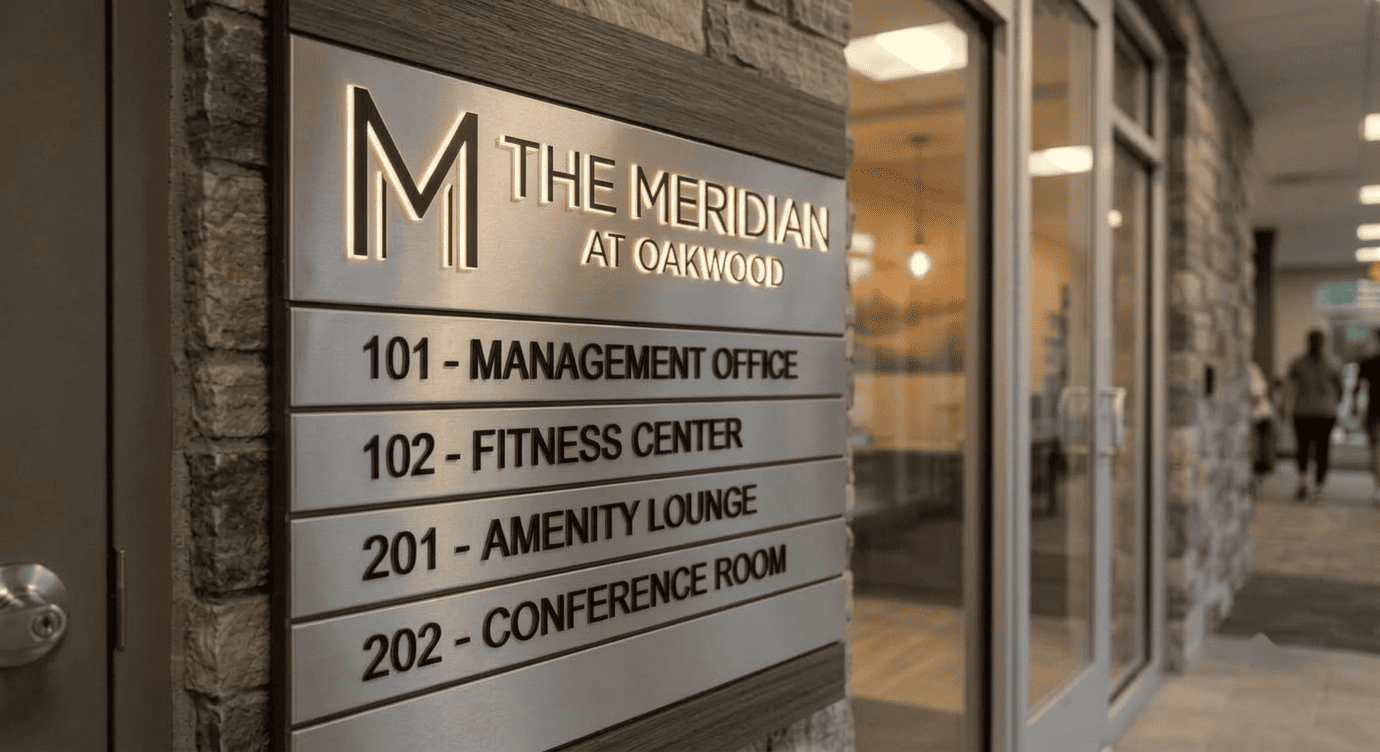
Wayfinding signage is one of those line items that are hard to budget for until you actually start...
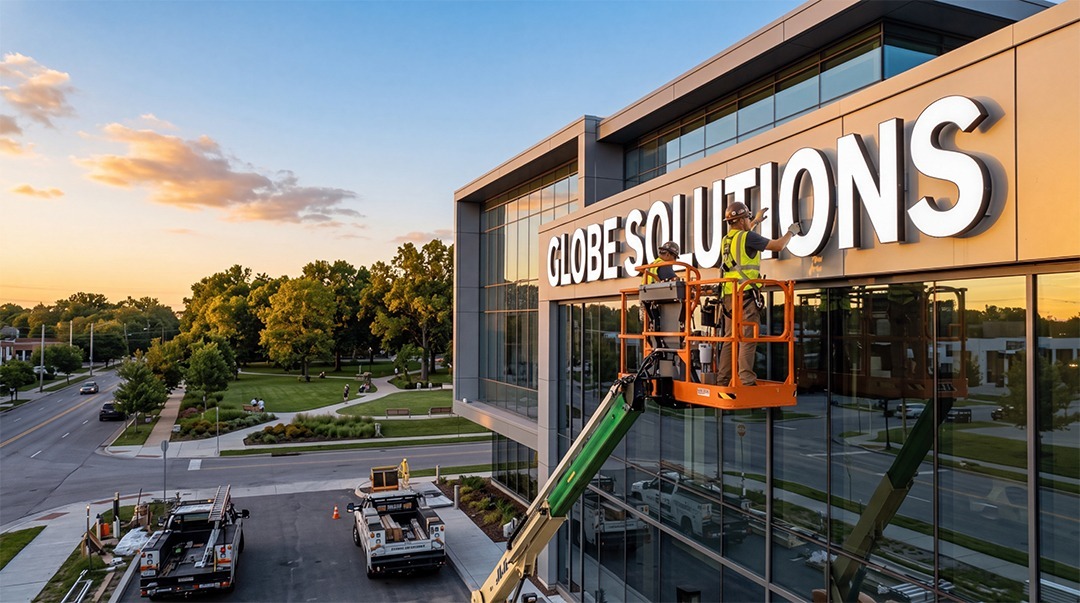
When two companies merge or one acquires another, the strategic work gets most of the attention: integration plans, leadership announcements, and financial modeling. Signage tends to get less until the rebrand timeline arrives and the question becomes how to change the identity of dozens or hundreds of locations at once.
M&A rebranding is rarely as simple as swapping logos. Every property may have different sign types, different conditions, different landlords, and different local permitting rules. Deadlines are often tight, brand standards must be applied consistently, and the budget has to hold up against unknowns nobody can see from a conference room.
This is where a national signage partner can help. By centralizing surveys, design, manufacturing, permitting, installation, and reporting under one program, a national partner gives finance and facilities teams something M&A budgets often lack: visibility. In this post, we'll cover why M&A signage budgets get complicated, what goes into them, how a national partner simplifies the process, and how to build a more predictable budget from the start.
Why M&A Rebranding Makes Signage Budgets More Complicated
Signage budgets for a single-location rebrand are manageable. Multiply that by dozens of sites, and the variables multiply with it. The most common sources of complexity include:
- Multiple properties and locations. Acquired locations may span several cities, states, or property types, from office buildings to retail storefronts to industrial campuses.
- Different existing sign types and conditions. One site may have a simple wall sign, while another has an illuminated pylon, a monument sign, and interior wayfinding, all in varying states of repair.
- Varying local permitting requirements. Cities have their own rules, time frames, and fees for signing permits. Some require multiple rounds of review.
- Different installation and labor costs. Labor rates, access requirements, and equipment needs (such as lifts or cranes) vary by market and by site.
- Brand standards that must be applied consistently. A new brand identity only works if it looks the same in every location, regardless of who produced or installed the sign.
- Tight transition timelines. The timeline is often dictated by customer communications, legal closing dates, and internal integration milestones, and there is little room for delays.
- Unexpected removal, repair, or replacement costs. Old signs can hide damaged walls or old electrical or corroded structures that are not seen until the sign is removed.
Each of these factors makes accurate forecasting harder, especially when they're managed separately across many vendors. If you're researching M&A rebranding costs, the honest answer is that the biggest cost drivers are often not the signs themselves, but the coordination and unknowns around them. For the broader brand side of the process, our guide to merger and acquisition rebranding strategy covers how signage fits into the full transition.
What Goes Into an M&A Signage Rebranding Budget?
A realistic signage rebranding budget covers far more than fabrication. Understanding the major categories helps you avoid line items that surface late and blow up the forecast.
Signage Design and Brand Adaptation
Before anything is built, your brand has to be translated into sign-ready specifications. This includes:
- Logo and brand updates adapted for signage formats
- Sign specifications covering dimensions, materials, illumination, and mounting
- Brand guidelines that define how each sign type should look and be applied
Brand identities designed for digital or print don't always translate directly to a 20-foot illuminated cabinet or a small suite ID plaque. Adaptation work ensures the result looks right at every scale.
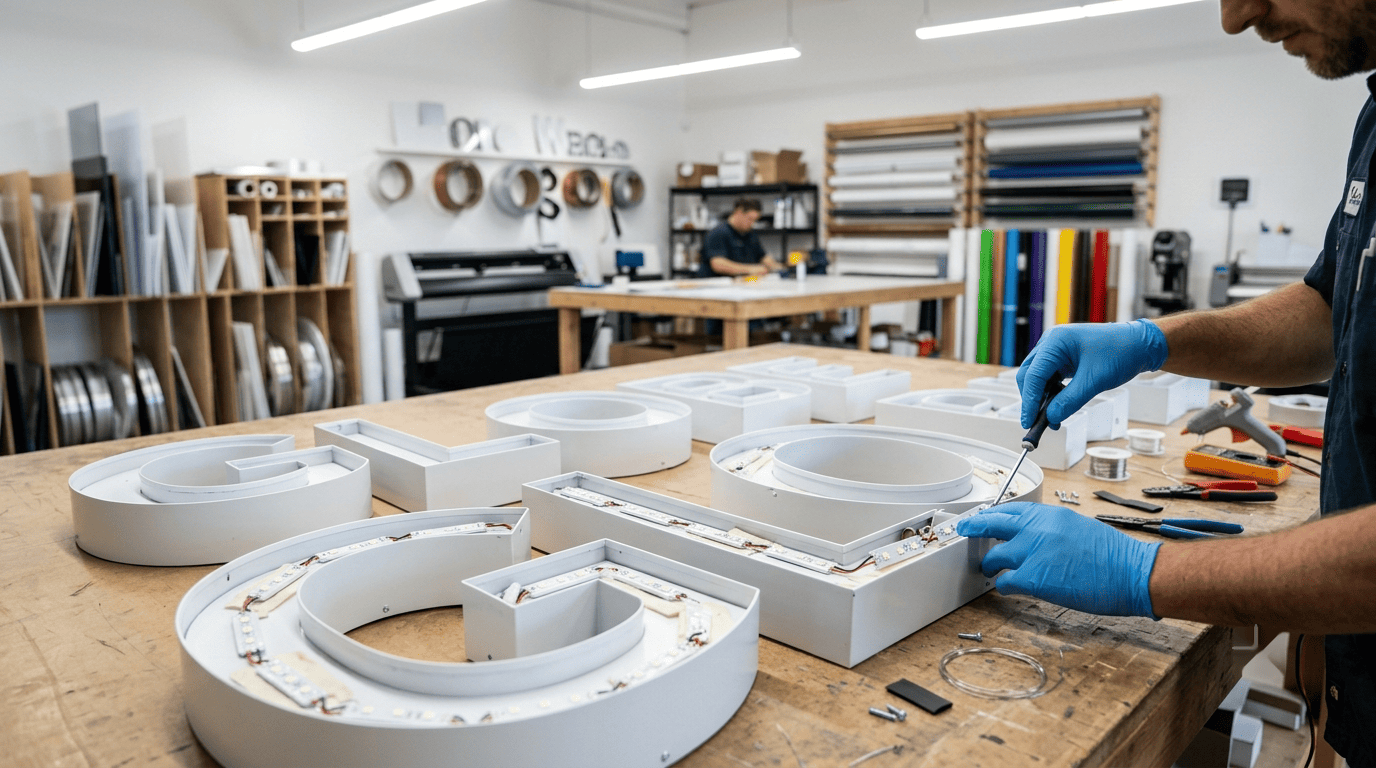
Sign Manufacturing
Manufacturing is usually the most visible portion of the budget and can include:
- Exterior signage such as channel letters, wall signs, and blade signs
- Interior signage including lobby signs, suite identification, and room signs
- Monument and pylon signs
- Building identification signage
- Wayfinding and directory signs
Costs vary widely based on size, materials, illumination, and complexity, which is why standardized specifications matter so much across a multi-location program.
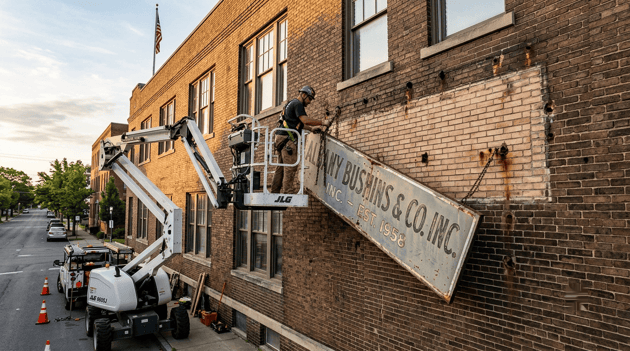
Sign Removal and Disposal
Old branding must come down before new branding goes up. Costs of removal may include:
- Removing existing signs
- Repairing the surface (patching mounting holes, repainting ghosting marks)
- Disposal/recycle of removed materials
This category is frequently underestimated, especially when older signs were installed years ago and the underlying surfaces have deteriorated.
Permits and Code Compliance
Permitting affects both cost and schedule. Includes considerations of:
- Local Sign Permit / Charges
- Zoning restrictions on size, height, lighting or location.
- interior signage and wayfinding ADA Accessible
- Landlord & Property Requirements (Separate approval may be required)
Permit timelines vary by jurisdiction, so early identification of requirements is critical to protecting the schedule.
Installation and Labor
Installation costs will depend on the type of installation and location. Some key factors:
- Hours for construction, security, site access, property restrictions
- Installation complexity e.g. height, electrical connections or structural mounting
- Travel and labor requirements, especially for geographically dispersed locations
Illuminated signs add another layer of complexity, because they must meet electrical standards,UL 48 and NEC Article 600, which cover product safety and installation, respectively. Verifying electrical conditions at each site before final pricing helps keep those requirements from turning into surprise costs.
Project Management and Logistics
Behind every successful multi-site rollout is a substantial coordination effort:
- Site surveys to verify conditions and measurements
- Scheduling across installers, permit approvals, and site availability
- Shipping and delivery of signs to each location
- Multi-location coordination and status tracking
When this work is handled informally or spread across multiple parties, it often becomes a hidden cost, in staff hours if not in invoices.
How a National Signage Partner Simplifies M&A Rebranding

A national signage partner doesn't change what a rebrand requires. It changes how the work is organized. Here's where that organization tends to help most.
One Partner Across Multiple Locations
Consolidating signage work under one provider reduces the number of vendors your team has to source, brief, contract, and manage. Instead of managing individual relationships in each market, you have one partner managing the entire program.That means less handoffs, less points of failure, less opportunities for miscommunication.
Scale matters here. Sunrise Signs, for example, supports customers across the country through a network of 400+ installers, which is the kind of reach a multi-state rollout depends on.
Centralized Project Management
Centralized management is often the biggest practical advantage for teams already stretched thin during an integration. A national partner typically offers:
- One project manager or team accountable for the whole program
- Centralized communication, so questions and approvals flow through a single channel
- Consistent documentation for every location, including surveys, approvals, and completion records
- Standardized workflows that apply the same process to every site
This consistency makes it far easier to track progress and identify problems before they threaten deadlines. It also mirrors what works on complex builds generally: large signage projects tend to succeed when design, fabrication, and installation are coordinated together, as we explain in our guide to the design-build process for large-scale signage.

Consistent Pricing and Budget Visibility
Comparable, well-structured information increases the predictability of the budget. A national partner can assist with:
- All types of signs have standard specifications
- Site-based cost estimates so you can see costs site by site
- More visibility on total project costs instead of compiling quotes from different vendors in different formats
- Assumptions documented and consistent, easier forecasting
Instead of reconciling a dozen proposals with different scopes and line items, finance teams can review a unified view of the program.
Nationwide Site Surveys
One of the best ways to avoid budget surprises is to do site surveys. • A survey of the locations prior to production helps identify:
- Existing signage condition
- precise measurements
- Electrical load
- Installation problems, such as limited access or structural issues
- Permits issues particular to each jurisdiction
A national partner can coordinate surveys as a single program rather than a series of one-off visits, producing consistent data across every location and giving you a stronger basis for final pricing.
Consistent Brand Execution
A rebrand succeeds when customers and employees see the same identity everywhere. Working with one partner helps ensure:
- The same colours and materials across sites
- Consistent typography and logo treatment
- Standardised sign types for similar applications
- Brand consistency across every location, regardless of market
This matters most in M&A situations, where a new brand needs to establish credibility quickly, and it applies inside the building as much as outside. Interior branding is often where employees first experience the new identity. For an example of a multi-sign programme delivered end to end, see Seamless Signage Solutions for a Vibrant New Fishtown Development.
National vs. Local Signage Vendors for M&A Rebranding
Neither is better in every case. Local vendors can also be a great fit for a small number of nearby locations, and can offer strong market knowledge and relationships. As the footprint grows, though, the coordination burden tends to shift. Here's how the two models generally compare:
|
Factor |
Multiple Local Vendors |
National Signage Partner |
|
Vendor coordination |
Multiple contacts |
Centralized |
|
Pricing |
May vary by market |
Can be standardized |
|
Brand consistency |
Requires coordination |
Centralized standards |
|
Site surveys |
Managed separately |
Coordinated program |
|
Project management |
Multiple workflows |
Unified workflow |
|
Reporting |
Different formats |
Centralized reporting |
|
Multi-location rollout |
More coordination |
One program structure |
The right choice depends on your number of locations, geographic spread, timeline, and the internal resources you have available to manage the project. For a broader look at the decision, readNational Signage Partner vs. Local Sign Company.
How to Build a More Predictable M&A Rebranding Signage Budget
Whether or not you work with a national partner, these steps can help you bring more predictability to your M&A rebranding budget.
Begin by taking a detailed inventory of the sites
Identify all locations where signage changes are required. Include address, type of property, and owner/lessee status. Missing locations are one of the most common causes of budget overruns, so build this list early and verify it with operations and real estate teams.
Types of Signage Classification
Classify signage as exterior building signage, monuments, pylons, interior signage, and wayfinding. Categorization helps to standardize specifications, compare costs across sites, and identify outliers.
Site Surveys Before Final Pricing
Early estimates are useful to plan, but final pricing should be based on survey data. Verified measurements, electrical conditions, and access requirements take much of the guesswork out of the budget.
Differentiating One-Time and Recurring Costs
Rebranding costs are mostly one-off expenses, but some signage has ongoing costs such as maintenance, illumination repairs, or lease-related sign fees. Dividing the two gives leadership a clearer picture of both the project budget and the long-term operating impact.
Consider permits and local requirements
Learn as soon as you can about the requirements for a research permit, including fees, review timeframes, and landlord approvals. Sign codes can restrict locations and may require design adjustments, which will affect cost and schedule.
Develop a Contingency for Unknown Site Conditions
Even if you do a really thorough survey, sometimes things only become apparent when you start stripping things out or fitting them in, like holes in walls or problems with the electrics. A contingency line item gives you a buffer so unexpected findings don't derail the entire budget.
Establish a Phased Installation Schedule
Rolling out in phases can help manage cash flow, prioritize high-visibility locations, and keep the workload realistic for installers and internal teams. A phased schedule also helps you apply lessons from early sites to later ones.
Example M&A Signage Budget Framework
If you're starting from scratch, a simple framework like this can help you structure the conversation with stakeholders and vendors:
|
Cost Category |
What It Covers |
|
Site Surveys |
Location assessment and measurements |
|
Design |
Brand adaptation and sign specifications |
|
Manufacturing |
Production of new signage |
|
Removal |
Existing signage removal |
|
Repairs |
Surface and electrical corrections |
|
Permits |
Local permitting and approvals |
|
Installation |
Labor and equipment |
|
Logistics |
Shipping and coordination |
|
Project Management |
Scheduling and reporting |
|
Contingency |
Unexpected site requirements |
Assigning estimates to each category at the location level, then rolling them up into a program total, provides both detail and a big-picture view. It also makes it easier to see where costs are concentrated and where standardization could help control them. Use this as a starting point for your own signage, rebranding costs planning and adjusting categories to fit your portfolio.
When Should Companies Bring in a National Signage Partner?
Not every rebrand needs a national partner, but there are situations when it’s particularly worth exploring one:
- A multi-location acquisition with dozens of vendors where one-by-one vendor negotiations would be time-consuming
- Multi-state rebranding with different permitting rules and installation requirements
- Tight rebranding deadlines where you need to align scheduling and parallel workflows
- Many properties have several types of signage, from small interior signs to large exterior structures.
- The need for consistent brand delivery across all locations
- Internal teams are not resourced for the signage project, which is common when staff are otherwise focused on other integration priorities.
If several of these apply, a centralized approach may save both time and budget uncertainty.
Questions to Ask a National Signage Partner Before an M&A Rebranding Project
Before committing, ask potential partners questions that reveal how they'll actually handle a multi-location program:
- How many locations can you manage simultaneously?
- Do you provide nationwide site surveys?
- Can you handle permitting?
- Do you manage sign removal and installation?
- How do you standardize pricing?
- How do you report project progress?
- Can you provide location-level budgets?
- How do you deal with unexpected site conditions?
- Can you support phased rollouts?
Clear, specific answers are a good indicator of whether a partner has the systems and experience to support a large-scale rollout.
The Long-Term Value of Centralized Signage Management
The benefits of a national signage partner often go far beyond the initial merger or acquisition. Over time, centralized sign management can lead to:
- Easier future acquisitions, a proven process and documented standards are already in place.
- Brand standards that stay the same as the company grows
- Fewer contracts and relationships to manage make vendor management easier
- Improved documentation such as location records, specifications, and history of installation
- It makes it easier to maintain signage because you know what is installed where (see our tips on how long signage lasts and how to maintain it).
- Scalable rollout processes that can be leveraged for future rebrands, new locations, or updates
For growing organizations, this long-term value can be just as important as the near-term budget clarity.
Final Takeaway
M&A Signage Rebranding is more than Just Designing Signage. Surveys, design, permitting, removal, logistics, installation, and reporting all shape the final cost and timeline, and when they're handled separately across many locations, budgets become harder to predict.
A centralized national signage partner can help pull these moving parts together into one program, giving teams more visibility, more consistent execution and a more manageable path from announcement to fully branded locations. If your merger or acquisition involves multiple sites, tight timelines, or limited internal bandwidth, a centralized approach is worth serious consideration.

